



Mobile drinking water tanks

Mobile drinking water tanks

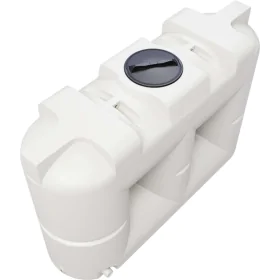
Mobile drinking water tanks are practical solutions designed to safely store and transport water under all conditions. Thanks to their design, they allow full tanks to be transported without the risk of damage or spillage.

A key element is the special baffles that stabilise the water inside the tank, minimising the rippling of the liquid during transport. This ensures that the tanks remain stable even in difficult road conditions, ensuring the safe transport of large volumes of water.

Various mobile tank capacities are available to suit the needs of both individual users and institutions:

  • 300 l - a compact solution for small applications,

  • 500 l, 1000 l, 1500 l - capacities ideal for households and small businesses, emergency situations

  • 2000 l, 3000 l - medium sized tanks ideal for small water supply emergencies or local emergency situations.

  • 5000 l, 7000 l - capacities dedicated to the transport of large quantities of drinking water, district emergency protection.

Mobile drinking water tanks are ideal for securing emergency situations - during water supply failures, natural disasters or conflicts when access to drinking water is difficult.


Check out our range of mobile tanks and ensure reliable access to water in any situation!

Active filters

Mobile drinking water tanks are made of robust, approved materials approved for contact with drinking water. The design of the tanks allows them to be easily filled, emptied and transported even when full. The use of internal baffles prevents rapid movement of the liquid, which increases vehicle stability and user safety.

These types of tanks are indispensable in:

  • crisis operations - as a water reservoir in case of water supply network failures,

  • conflict situations - as a source of clean drinking water for the population and services,

  • agriculture and construction - to supply workers and farms,

  • mass and logistical events - to supply water to places without infrastructure.

With a wide range of capacities (from 300 litres to 7,000 litres), every user can choose a solution to suit their needs - from small mobile tanks to large transportable reservoirs.

Aquatechnika provides customer service in the largest Polish cities - Warsaw, Krakow, Wrocław, Gdańsk, Poznań, Łódź, Szczecin, Bydgoszcz, Lublin, Białystok, Katowice, Rzeszów, Toruń, Olsztyn, Kielce, Zielona Góra, Opole, Gorzów Wielkopolski - as well as deliveries to neighbouring countries such as Germany, the Czech Republic, Slovakia, Lithuania or Ukraine.

Order a mobile drinking water tank and secure yourself for any emergency situation!

FAQ - questions and answers

Why choose a mobile drinking water tank?

The mobile drinking water tank allows not only the storage but also the safe transport of full containers. Thanks to special baffles that stabilise the liquid, the water does not move abruptly during the journey, guaranteeing stability and safety.
0

What capacities of mobile tanks are available?

The range includes tanks with capacities from 300 litres to 7,000 litres. The smallest models are ideal for domestic use, while the largest models work well in logistics, agriculture or emergency operations. Popular capacities are: 300, 500, 1000, 1500, 2000, 3000, 5000 and 7000 litres.
0

What can mobile drinking water tanks be used for?

Mobile tanks are indispensable in emergency situations, during natural disasters or conflicts. They also prove their worth in agriculture, construction, mass events and logistics, where large quantities of clean drinking water are needed.
1

What does the use of baffles in mobile tanks offer?

The baffles in the tanks have a stabilising function - limiting the movement of the liquid during transport. This makes the tank more stable, the vehicle drives more safely and the tank structure itself is less likely to be damaged.
0

Are mobile tanks suitable for emergency situations?

Yes - mobile drinking water tanks are one of the best solutions for times of crisis. They can be used as a water reservoir during emergencies, supply interruptions, natural disasters or conflicts. They provide an independent source of clean drinking water where it is needed most.
0