














- -29%


sale offer ends in just
| Delivery methods | Name | Time of delivery | Price |
|---|---|---|---|

|
Kurier ( przelew na konto) | Czas dostawy od 2-4 dni | Free! |

|
Indywidualna wycena dostawy - Spedycja | Please confirm your order - delivery costs will be emailed to you as a separate proforma invoice. Shipping quote for large-volume products. Please be patient for a while. | individual valuation |
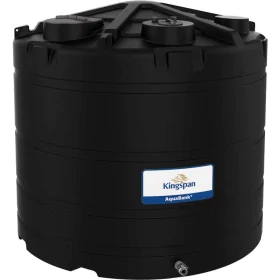
Aquabank rainwater tank
Capacities 200l - 28000l Single-walled tanks Black colour
Price:
Download PDF

Product compliance details: Manufacturer responsible for the product
Responsibility for the Product
Product code | Capacity [l] | Length [mm] | Width [mm] | Height [mm] | Equipment |
0026507 | 200 | 540 | 540 | 1 010 |
|
0026514 | 600 | 1250 | 730 | 1 040 | |
0026515 | 1 000 | 1 950 | 640 | 1 350 | |
0026534 | 1 225 | 1 780 | 760 | 1 400 | |
0026535 | 1 500 | 2 100 | 750 | 1 400 | |
0026537 | 1 200 | 1 700 | 1 070 | 1 150 |
|
0026574 | 2 500 | 2 280 | 1 280 | 1 340 | |
0026582 | 3 500 | 1 900 | 1 900 | 1 800 | |
0026586 | 5 000 | 2 010 | 2 010 | 2 300 | |
0026589 | 9 000 | 2 300 | 2 300 | 2 900 | |
0026358 | 15 000 | 2 950 | 2 950 | 2 750 |
|
0027896 | 22 000 | 2 480 | 2 480 | 5 265 | |
0027897 | 28 000 | 2 480 | 2 480 | 6 258 |

1. select a DECORATIVE TANK, which matches the colour scheme of your surroundings and has a capacity suitable for you.
2. measure the diameter of the downpipe and select a suitable RAINWATER COLLECTOR .
3. match the diameter of theconnecting hose between the collector and the tank (most collectors have an outlet of 32 mm)
4. match the TANK with the colour of the rainwater tank.
If you wish, you can equip the set with a DRAIN HOSE to empty the tank during winter.

This short guide will help you choose the right capacity for your underground rainwater storage tank - without difficult formulas. We will show you how to estimate your needs, count the amount of water from your roof, select the capacity and plan a simple garden installation.
List the uses: watering the garden, flushing toilets, laundry, washing the car, housework. This will allow you to estimate the real need for water in a typical week.
In simple terms, assume: annual rainfall × roof area × runoff coefficient. For most roofs, you can assume a coefficient of around 0.9 (depending on the roofing and the layout of the gutters).
Roof 120 m², annual rainfall ~600mm (approx. 600 l/m²). Estimate: 120 × 600 × 0.8 ≈ 57,600 l/year. This figure helps to select the capacity for a period without rain. And a period without rain can last for 3 weeks. Therefore, you must divide the result by 21 days. That is: (57600 l /365 days)*21 days = 3314 l, the result according to the estimation should be taken as a minimum. Therefore then we choose 4000l , 5000l, 6000l tanks - because of how we will use the rainwater.
It is most practical to select a tank that will store a supply of water for 2-3 weeks of your needs.
How to calculate capacity: annual rainfall × roof area × runoff coefficient ≈ annual amount of rainwater to be collected.
If you prefer, open the calculator in a new tab: Tank selection calculator. If you have any problems, please contact our customer service.
In detached houses, underground rainwater tanks are the best choice - they do not take up space in the garden, provide stable temperatures, no water freezing and allow larger capacities without affecting aesthetics.
The best material is PE, HDPE, MDPE plastic - it is lightweight, corrosion resistant, easier to install and above all airtight for many years .
It is worth paying attention to water and ground conditions. If the ground water level is high or the soil is clayey, flat tanks such as the F line, Bolt, Eco line Slim, etc., are the best choice.
On the other hand, if the conditions are normal, any solution can be used. If you have any problems, please contact our customer service.
The simplest arrangement: gully filter in front of the tank or basket filter, underground tank, floating intake, automatic pump and point of use (tap). This makes watering convenient and economical.

For example: family of 3-4 people + garden of 80-150 m² → 4000-6000 l usually works well. Larger garden / intensive watering → 8000-10 000 l. Verify with the calculator above.
Yes - using a suitable system (rainwater control unit/automatic switchover) and filtration.
Plan an overflow to an infiltration or rainwater drain in accordance with local regulations.
Wybrałem Aquabank pojemność 2 x 1000l
Złożyłem wniosek i otrzymałem dofinansowanie z WFOŚiGW. Teraz mam zapas wody na podlewanie.
| Nazwa | Capacity | Image | Unit price |
|---|---|---|---|
Aquabank rainwater tank |
200l |

|
|
Aquabank rainwater tank |
600l |

|
|
Aquabank rainwater tank |
1000l |

|
|
Aquabank rainwater tank |
1200l |

|
|
Aquabank rainwater tank |
1225l |
|
|
Aquabank rainwater tank |
1500l |
|
|
Aquabank rainwater tank |
2500l |
|
|
Aquabank rainwater tank |
3500l |

|
|
Aquabank rainwater tank |
5000l |
|
|
Aquabank rainwater tank |
9000l |
|
|
Aquabank rainwater tank |
15000l |

|
|
Aquabank rainwater tank |
22 000 l |

|
|
Aquabank rainwater tank |
28 000 l |

|




Zbiornik na 5
Duży magazyn deszczówki. Kupiłem z dofinansowaniem Moja Woda. Do tej pory działa, więc mogę polecić